Marked by the Past
By Nai Foudeh

Download PDF version
History is credited with the ability to shape nations and cultures, but growing research suggests it may too, shape our biology.
The consequences of war, famine, and oppression may not end when the events themselves do. Epigenetic research suggests that these experiences can leave marks that influence the health of marginalized groups long after the original trauma has passed.
Epigenetics is the study of how gene expression is altered in response to environmental factors, with these changes potentially persisting for generations—though epigenetics does not directly change the DNA sequence. Without obfuscating the details of complex biological processes, epigenetics essentially works by either "silencing" or "activating" genes. Gene "silencing", known as DNA methylation, is when methyl groups are added to the DNA base, which hinders the gene from being expressed. Gene "activation" or upregulation through histone modification occurs when the proteins surrounding DNA are altered in a way that dysregulates gene expression, either upregulating ("activating") or downregulating (Hamilton, 2011). The presence of epigenetic processes can be detected through gene sequencing and, for simplicity's sake, I will refer to them as "epigenetic marks" or "tags" for the remainder of this essay.
Biological Basis of Epigenetic Inheritance
As a case study, findings suggest a correlation between the British occupation in India and the prevalence of diabetes across the subcontinent.
During the colonial era in India, farmers were forced to prioritize cultivating industrial "cash crops"—from tea to opium—over food production, or else face heavy taxation. Combined with environmental dependence on monsoon rains, famines were a common and episodic occurrence in the Indian subcontinent all throughout the late 18th to 19th century (Roy, 2016).
Today, large-scale Genome-Wide Association Studies (GWAS) have found that Indians possess unique epigenetic markers that increase the risk of type-2 diabetes–younger and at lower weights–compared to other populations (Kooner et al., n.d.). The actual DNA sequence is not changed, but epigenetic marks can initiate the activation and silencing of genes such as PDHB, which, when silenced, slows the conversion of glucose into energy; basically slowing metabolism and promoting fat storage. It also upregulates the gene GRB14, which contributes to impaired insulin signaling and triggers insulin resistance. Insulin is responsible for distributing glucose to muscle and fat cells, and when inhibited, leaves glucose all out in the bloodstream, causing high blood sugar levels (Loh et al., 2022).
Why does the body initiate this epigenetic process? While these traits are unfavorable in modern times, during times of famine and food insecurity, it's hypothesized to be evolutionarily advantageous for the body to spare glucose for the immune system and essential organ function (instead of insulin distributing it throughout the body) (Soeters & Soeters, 2012), and store visceral fat, which can release stored energy faster than subcutaneous fat (Arner, 1995).
This way, the body learns to prepare itself for future periods of food scarcity, and the epigenetic profile of this population changes, not only in the affected people, but potentially for generations to come.
When a man or woman undergoes adverse experiences such as famine or war, these cause epigenetic changes in their bodies. When a pregnant woman undergoes adverse experiences such as famine or war, she too experiences epigenetic changes, but this extends not only to herself, but also to her fetus, and–if the fetus is female–the developing eggs within the fetus. This is one way multiple generations can all adopt the same epigenetic tags, with the environment altering the epigenetic markers of three to four generations at once, referred to as 'epigenetic intergenerational inheritance' (Skinner & Nilsson, 2026). It's important to note that the vast majority of epigenetic marks are not inheritable. When a new embryo forms, the parents' epigenetic marks are mostly expunged in a process called epigenetic rebooting. This is generally the case, except for certain marks, which persist past this erasure (Xia & Xie, 2020). Really, everyone collects epigenetic marks based on lifestyle, diet, environment, etc. Epigenetics does not occur exclusively as a result of traumatic experiences. For example, when you spend time in the sun, the UV radiation signals your skin cells to alter your gene expression to produce eumelanin, which protects your cells from DNA damage with a dark tint–also known as a tan. And while–to the displeasure of many teenage girls in the summer–the tan will eventually fade as the dark pigmentation is a temporary change in gene activity, frequent tanning can leave lifelong epigenetic marks on your cells, which may present overtly as solar lentigines or "sun spots". In these spots, the epigenetic controls of melanin have been upregulated, leaving those specific skin cells to produce excess pigment (Mpofana et al., 2025). However, as mentioned, this has not been shown to transfer to embryos or pass down generations. Even if a pregnant woman was frequently tanning and has abundant sun spots, the infant in utero (in the womb) will not inherit this specific gene expression.
The difference between epigenetic marks that persist, presenting themselves in future generations, and those that are expunged during epigenetic rebooting is whether the epigenetic changes occur in, or otherwise influence, the germline (the cells that become sperm or eggs) (Kelly, 2014). Namely, epigenetic changes related to diet and nutrition (Guo et al., 2020), chronic stress (Kac et al., 2026), environmental toxins (Wairimu, 2026), and metabolic disorders (Stegemann & Buchner, 2015) all have been shown to alter germline epigenetic profiles and, in some cases, contribute to intergenerational or transgenerational epigenetic inheritance. Intergenerational inheritance describes epigenetic inheritance from parents to offspring as they develop in utero, while transgenerational inheritance is when epigenetic markers persist in unexposed, later generations.
A number of animal studies have indicated the presence of transgenerational epigenetic inheritance. In one study, researchers induced undernourishment in rats for 50 generations. Interestingly, the results found similar epigenetic markers in later generations of rats and humans whose ancestors had undergone famine, including insulin resistance and low birth weights (correlated with future development of diabetes). Most damningly, these rats were then reintroduced to standard, healthy diets for the next two consecutive generations, and still, the metabolic changes were unable to be reversed, and the epigenomes persisted. Those rats had never experienced any form of undernutrition themselves, nor did their parents or grandparents, yet they still suffered epigenetic changes from their ancestral history of malnutrition (Hardikar et al. 2015). While difficult to replicate, the study was rigorous and well executed, spanning over so many generations. Similar studies have produced results consistent with the findings of epigenetic inheritance or "epigenetic memory". Such as that conducted at Columbia University, which found that, in roundworms, epigenetic tags are inherited through at least 3 consecutive generations (Rachavi et al., 2014), in this case, intergenerationally.
Psychological Dimensions of Epigenetic Inheritance
While epigenetics is widely recognized in the scientific community for its physiological effects that may impact the health of families for generations, the psychological effects and susceptibility to adverse mental health conditions are often understated, despite the profound sociological impacts. Studies have been conducted that demonstrate that adverse and traumatic experiences can alter one's epigenetic profile during one's own lifetime, similar to how diet or exercise can, but in the brain. For example, experiencing Adverse Childhood Experiences (ACEs) such as abuse, assault, or neglect can trigger epigenetic changes (to the glucocorticoid receptor gene NR3C1) that lead to fewer overall receptors that can bind to cortisol (the stress hormone), resulting in higher levels of cortisol. Increased baseline cortisol is associated with increased risk of Major Depressive Disorder (MDD) and Anxiety Disorder (Brennecke, 2026).
On a positive note, studies have emerged suggesting that these epigenetic changes associated with psychiatric and mental health conditions are potentially reversible. A study showed that after just one week of intensive residential therapy, adolescents showed favorable changes in DNA methylation patterns, correlating with improvement in PTSD symptoms (Kaliman et al., 2022). Another study found that DNA methylation patterns were changed in participants who underwent mind-body therapies with professionals, compared to those who did not, suggesting that therapeutic interventions may influence epigenetic regulation associated with improved stress regulation and mental health (Kripalani et al., 2022).
But if not resolved during one's lifetime, will these epigenetic markers caused by trauma or stress persist intergenerationally or even transgenerationally, as insulin resistance does? What does that mean for historical atrocities and traumatic experiences like war and genocide that alter a whole society's epigenetic profile? A study of 32 holocaust survivors and their children found increased rates of stress disorders, such as PTSD, Anxiety Disorder, and Major Depressive Disorder, compared to families unaffected by World War 2. Epigenetic marking was found on the gene FKBP5–associated with regulating stress hormones–in both the holocaust survivors and their children, despite the children not having experienced ACEs or trauma themselves (Yehuda et al., 2016). The researchers emphasized that this presents a profound effect on these children's ability to cope with environmental stressors. Contrarians may present the classic "nature vs. nurture" argument and propose that one cannot be sure that these epigenetic tags really are inherited. It may be that the parents' traumatic experiences led to a somewhat more stressful family environment for the children growing up in, and that's the root of the children's stress disorders. So, in order to fully isolate the variables and separate genetics from parenting, various cross-fostering studies have been conducted, isolating the parents from the infant. Of course, this would be just slightly unethical in humans, so one study conducted an experiment using mice. Researchers placed parent mice under stress, then transferred newborn offspring to unstressed, untraumatized foster parents. Still, the offspring demonstrated anxious behavior and altered stress hormone regulation, consistent with altered DNA methylation epigenetics. Given that the offspring never experienced the stressed mother's parenting, the differences are posited to come directly from biological inheritance of the same epigenetic markers (Bale 2015). A similar study found that in mice of both sexes exposed to stressors, their offspring exhibited increased impulsivity and risk-proneness, with effects passing paternally and lasting up to 5 generations. This indicates that epigenetic inheritance is not solely through the mother experiencing prenatal stress, but that in both males and females before pregnancy, these epigenetic markers in response to stress may be reflected in offspring (Boscardin et al., 2022), which makes sense given that stress does impact the germline for both sexes (González & González, 2021).
Of course, biology never plays the sole role in human behavior, and the majority of scientists and researchers have moved beyond the traditional nature vs. nurture argument, in that they are not mutually exclusive, and in reality it's most plausible that behavior is a combination of the two. Acknowledging that the study of epigenetics is still an emerging and novel field, numerous well-accredited studies suggest the presence of transgenerational epigenetic inheritance in both physiological and psychological domains. This, combined with the presence of environmental effects, may contribute to a society collectively healing from shared historical trauma. Studies have shown higher rates of PTSD, Major Depressive Disorder (MDD), and Anxiety Disorder (AD) in Indigenous communities that have experienced subjugation and historical trauma: forced relocation, genocide, and cultural suppression, to name a few. In an epigenetic study, researchers studied Alaska Natives and found that these historical atrocities were associated with differences in DNA methylation, where gene expression was altered in genes such as SGK1–a regulator of the body's stress response–which, when dysregulated is linked to the aforementioned stress disorders (PTSD, MDD, and Anxiety) and MAPK10 (JNK3) which controls neuronal communication and regulates cellular stress responses– which may indicate vulnerability to stress-related neuronal effects in this population. The study provides the foundation of how collective trauma can become biologically embedded through epigenetic changes, and poses a real threat to these populations' mental health (Rogers-LaVanne et al., 2023).
The way these effects can manifest within a society will vary; however, if populations that have experienced the brunt of human-inflicted atrocities carry these epigenetic markers, it provides a scientific basis for the reality many marginalized communities have known about for generations: historical trauma. What's critical is to not overemphasize the importance of epigenetic inheritance–and overlook the responsibility of modern injustices. Higher rates of physical and mental health disorders, even with an epigenetic background, will certainly be exacerbated by systemic oppression and socioeconomic factors if not contended with. Epigenetic markers are not permanent DNA mutations, and researchers continue to study the reversibility of epigenetic markers through therapies and mental health counseling–which must become more available and accessible to affected communities. Positive interventions like therapy, stemming from informed psychological research, can enable generations to address their inherited trauma–and resilience.
References
Arner, P. (1995). Differences in lipolysis between human subcutaneous and omental adipose tissues. Annals of Medicine, 27(4), 435–438. https://doi.org/10.3109/07853899709002451
Bale, T. L. (2015). Epigenetic and transgenerational reprogramming of brain development. Nature Reviews Neuroscience, 16(6), 332–344. https://doi.org/10.1038/nrn3818
Boscardin, C., Manuella, F., & Mansuy, I. M. (2022). Paternal transmission of behavioural and metabolic traits induced by postnatal stress to the 5th generation in mice. Environmental Epigenetics, 8(1), dvac024. https://doi.org/10.1093/eep/dvac024
Bošković, A., & Rando, O. J. (2018). Transgenerational epigenetic inheritance. Annual Review of Genetics, 52(1), 21–41. https://doi.org/10.1146/annurev-genet-120417-031404
Brennecke, U. (2026). Stress and age: How early childhood stress influences the development of ADHD. ADxS.org. https://www.adxs.org/en/page/84/1-stress-by-age-at-exposure-early-childhood-stress
González, C. R., & González, B. (2021). Exploring the stress impact in the paternal germ cells epigenome: Can catecholamines induce epigenetic reprogramming? Frontiers in Endocrinology, 11, Article 630948. https://doi.org/10.3389/fendo.2020.630948
Guo, T., Luo, F., & Lin, Q. (2020). You are affected by what your parents eat: Diet, epigenetics, transgeneration and intergeneration. Trends in Food Science & Technology, 100, 248–261. https://doi.org/10.1016/j.tifs.2020.04.021
Hamilton, J. P. (2011). Epigenetics: Principles and practice. Digestive Diseases, 29(2), 130–135. https://doi.org/10.1159/000323874
Hardikar, A. A., Satoor, S. N., Karandikar, M. S., Joglekar, M. V., Puranik, A. S., Wong, W., Kumar, S., Limaye, A., Bhat, D. S., Januszewski, A. S., Umrani, M. R., Ranjan, A. K., Apte, S. P., Yajnik, P., Bhonde, R. R., Galande, S., Misra, A., McKinnon, R. A., Keech, A. C., . . . Yajnik, C. S. (2015). Multigenerational undernutrition increases susceptibility to obesity and diabetes that is not reversed after dietary recuperation. Cell Metabolism, 22(2), 312–319. https://doi.org/10.1016/j.cmet.2015.06.008
Kac, E., Qi, Q., & Ryznar, R. (2026). Epigenetic changes associated with multi-generational trauma: Characterization, mechanisms, and therapeutics. Frontiers in Psychiatry, 17, Article 1769422. doi.org
Kaliman, P., Cosín-Tomás, M., Madrid, A., Roque López, S., Llanez-Anaya, E., Papale, L. A., & ... (2022). Epigenetic impact of a 1-week intensive multimodal group program for adolescents with multiple adverse childhood experiences. Scientific Reports, 12, Article 17177. https://doi.org/10.1038/s41598-022-21246-9
Kelly, W. G. (2014). Transgenerational epigenetics in the germline cycle of Caenorhabditis elegans. Epigenetics & Chromatin, 7, Article 6. https://doi.org/10.1186/1756-8935-7-6
Kooner, J. S., MuTHER Consortium, Saleheen, D., Sim, X., Sehmi, J., Zhang, W., Frossard, P., Been, L. F., Chia, K., Dimas, A. S., Hassanali, N., Jafar, T., Jowett, J. B. M., Li, X., Radha, V., Rees, S. D., Takeuchi, F., Young, R., Aung, T., . . . Chambers, J. C. (2011). Genome-wide association study in individuals of South Asian ancestry identifies six new type 2 diabetes susceptibility loci. Nature Genetics, 43(10), 984–989. https://doi.org/10.1038/ng.921
Kripalani, S., Pradhan, B., & Gilrain, K. L. (2022). The potential positive epigenetic effects of various mind-body therapies (MBTs): A narrative review. Journal of Complementary and Integrative Medicine, 19(4), 827–832. https://doi.org/10.1515/jcim-2021-0039
Laplante, D. P., Brunet, A., Schmitz, N., Ciampi, A., & King, S. (2008). Project Ice Storm: Prenatal maternal stress affects cognitive and linguistic functioning in 5 1/2-year-old children. Journal of the American Academy of Child and Adolescent Psychiatry, 47(9), 1063–1072. https://doi.org/10.1097/CHI.0b013e31817eec80
Loh, M., Zhang, W., Ng, H. K., Schmid, K., Lamri, A., Tong, L., Ahmad, M., Lee, J. J., Ng, M. C. Y., Petty, L. E., Spracklen, C. N., Takeuchi, F., Islam, M. T., Jasmine, F., Kasturiratne, A., Kibriya, M., Mohlke, K. L., Paré, G., Prasad, G., Shahriar, M., … Chambers, J. C. (2022). Identification of genetic effects underlying type 2 diabetes in South Asian and European populations. Communications Biology, 5(1), Article 329. https://doi.org/10.1038/s42003-022-03248-5
Morgan, H. D., Sutherland, H. G. E., Martin, D. I. K., & Whitelaw, E. (1999). Epigenetic inheritance at the agouti locus in the mouse. Nature Genetics, 23(3), 314–318. doi.org
Mwende Wairimu, G. (2026). Environmental endocrine disruptors and epigenetic toxicity: Linking molecular modifications to transgenerational health impacts. Idosr Journal of Biochemistry, Biotechnology and Allied Fields, 11(1), 31–35. https://doi.org/10.59298/IDOSR/JBBAF/2026/1023135
Rechavi, O., Houri-Ze'evi, L., Anava, S., Goh, W. S. S., Kerk, S. Y., Hannon, G. J., & Hobert, O. (2014). Starvation-induced transgenerational inheritance of small RNAs in C. elegans. Cell, 158(2), 277–287. doi.org
Rogers-LaVanne, M. P., Bader, A. C., de Flamingh, A., Saboowala, S., Smythe, C., Atchison, B., Moulton, N., Wilson, A., Wildman, D. E., Boraas, A., Uddin, M., Worl, R., & Malhi, R. S. (2023). Association between gene methylation and experiences of historical trauma in Alaska Native peoples. International Journal for Equity in Health, 22(1), Article 182. https://doi.org/10.1186/s12939-023-01967-7
Roy, T. (2016). Were Indian famines “natural” or “manmade”? (Working Paper No. 243). London School of Economics and Political Science. https://www.lse.ac.uk/asset-library/information/wp243.pdf
Skinner, M. K., & Nilsson, E. E. (2026). Epigenetic transgenerational inheritance. In Encyclopedia of reproduction (3rd ed., Vol. 3, pp. 555–558). Elsevier. wsu.edu
Soeters, M., & Soeters, P. (2012). The evolutionary benefit of insulin resistance. Clinical Nutrition, 31(6), 1002–1007. https://doi.org/10.1016/j.clnu.2012.05.011
Stegemann, R., & Buchner, D. A. (2015). Transgenerational inheritance of metabolic disease. Seminars in Cell & Developmental Biology, 43, 131–140. https://doi.org/10.1016/j.semcdb.2015.04.007
Waterland, R. A., & Jirtle, R. L. (2003). Transposable elements: Targets for early nutritional effects on epigenetic gene regulation. Molecular and Cellular Biology, 23(15), 5293–5300. doi.org
Xia, W., & Xie, W. (2020). Rebooting the epigenomes during mammalian early embryogenesis. Stem Cell Reports, 15(6), 1158–1175. https://doi.org/10.1016/j.stemcr.2020.09.005
Yehuda, R., Daskalakis, N. P., Bierer, L. M., Bader, H. N., Klengel, T., Carlebach, F., & Binder, E. B. (2016). Holocaust exposure induced intergenerational effects on FKBP5 methylation. Biological Psychiatry, 80(5), 372–380. doi.org
Images
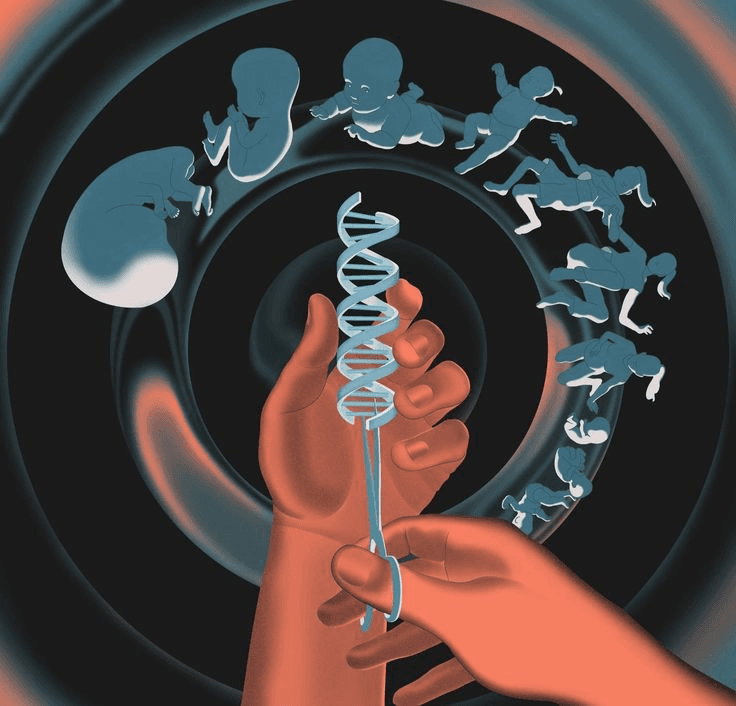
Figure 1
Dangerous Designs by Jun Cen.
From Dangerous Designs [Digital illustration], by J. Cen, 2023, The New Yorker. https://www.newyorker.com/magazine/2023/09/11/the-transformative-alarming-power-of-gene-editing?utm_source=Pinterest&utm_medium=organic&epik=dj0yJnU9bHpoUjM3cXZ1b3NUaFFKWDJiT29oeUs3cU5xZ1JDSGkmcD0wJm49MWpkRjc0M3ZhVWppY2gxSDRlYmJJUSZ0PUFBQUFBR3Bzd3FZ
Copyright 2023 by Condé Nast.
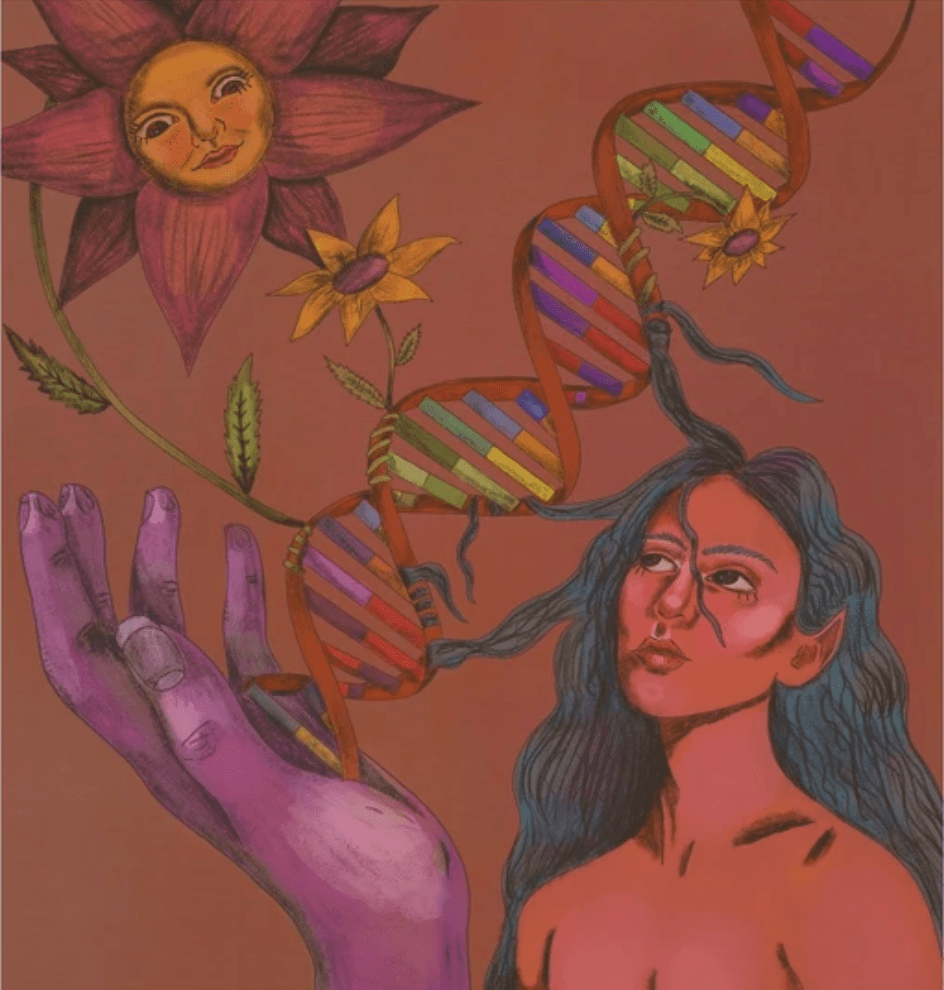
Figure 2
Epigenetics by Sophia Wickens.
From Epigenetics [Digital illustration], by sophimagination, n.d. https://www.redbubble.com/i/poster/Epigenetics-by-sophimagination/73256890/flk2
In the public domain.