Before Emirates, There Was PIA: The Rise And Fall Of An Aviation Giant
By Asma Waris
Download PDF version
Before Emirates, There Was PIA: The Rise And Fall Of An Aviation Giant
How Pakistan International Airlines went from an Aviation Giant to fighting for its own survival?
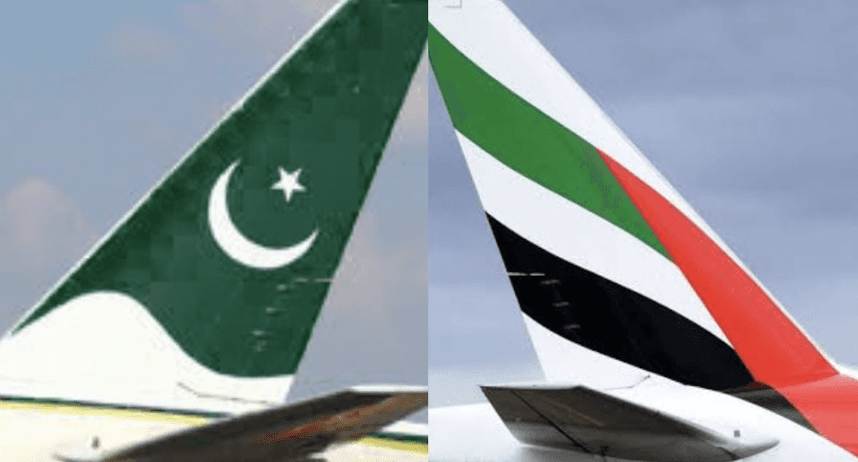
On 25th October 1985, a new airline took to the skies. An airline that would one day come to rule the skies like no other. That was the date that Emirates Airlines began. But this is not the story of Emirates airlines. This is the story of the airline that helped Emirates get its start, right down to the cockpit. That very first Emirates flight was captained by Captain Fazle Ghani from Dubai to Karachi that very day and the second flight was by Captain Ejaz-ul-Haq for Mumbai the same day. Emirates’s very first flights. Both pilots were assigned from Pakistan International Airlines to fly an aircraft that PIA had just leased to Emirates. PIA helped in providing the technical expertise and the aircrafts, Airbus A300B4-200 and a Boeing 737-300, that initially allowed Emirates to begin its operations. In October, around a hundred PIA pilots, engineers, and crew travelled to Dubai to get the new airline off the ground, and the Emirates’ first crew were sent to be trained at PIA’s very own training center in Karachi. Therefore, when Emirates took off, they did so with PIA pilots, PIA planes and PIA trained crew members.
Emirates chose Karachi as its first destination, revealing Pakistan’s influential role and geographical closeness in helping establish the airline. To honor the airline’s historic first flight, Emirates uses the EK code standing for “Emirates to Karachi”. Forty years later, Emirates is one of the largest airlines in the world. PIA is not. It is funded by state tax dollars, an aging fleet, and a debt burden it cannot afford. It is frequently facing economic disadvantage, operations inefficiency, political and public controversy. But how did one of the most revered airlines in the region get to the point of such a turnaround?
This story is not a tragedy, this is an investigation. An investigation into the fall of an aviation giant. Herein, we will uncover a chain of specific, traceable decisions in ownership, fleet management, and routing policy that shifted a regional aviation leader into a monitoring situation. It is important to comprehend what PIA gave up, in order to understand how it lost what it once had, or rather, what was mismanaged from it.
Origins and Historical Context
Pre Independence:
At the beginning of it all, PIA started as a symbol of pride not decline.
On 14th August 1947, Pakistan was born and its two parts (the second part being modern day Bangladesh) were separated by the ocean and over a thousand miles of land from India. Due to the divide, it took three days for people on a train journey if the railway tracks were safe to use at all, and closer to a week using the sea route through Ceylon (now Srilanka). The government of Muhammad Ali Jinnah was looking for an air link and something to connect both the halves of the country, fortunately, one already existed: Orient Airways, a small private airline. The airline’s roots go back to the Orient airways which were founded on October 23, 1946 and established by brothers Mirza Ahmed and Mirza Abhol Hassan Ishpahani, from a wealthy Bengali industrial textile family and backed by Sir Adamjee Dawoud, Head of Bengals’ jute manufacturing empire. The airways’ headquarter was in Calcutta (now Kolkata), British India, at the time until it was transferred to the independent state of Pakistan. The airways connected Karachi and Dacca (now Dhaka) by Air. It was never expected to be a big profit line item, but was expected to be a moneylender for the new state when it was originally constructed for use by the Pakistan Air Force (PAF).
By the time of October 1947, Orient’s planes were already cruising from end to end of the new nation, connecting Karachi and Dhaka through Delhi and Kolkata, as well as refugees as they scrambled from one side of the line to the other. Over mountains that offered no radio facilities (no help at all) and with just the use of maps, the airline never lost an aircraft on their lifeline to the remote north of Kashmir to Skardu and Gilgit.
Post Independence:
After Pakistan gained independence in 1947, Orient airways started operations using a fleet of three Douglas DC-3 aircraft. Furthermore, In 1949, the airways became the first Asian airline to operate a twin-engine Convair CV-240. Slowly in the early 50s, the airways started to lose money as the market got competitive with British Overseas Aircraft Corporation (BOAC) entering. As an outcome of losses, the government of Pakistan, under a leasing agreement started using Orient airways in 1952. They paid 25 million rupees to purchase three Lockheed L-1049C Super Constellations on lease from Orient, under a newly formed government-owned company – Pakistan International Airlines (PIA) which was created as a government department by Pakistan's Ministry of Defence in 1951. PIA had been established as a department of Pakistan’s Civil Aviation Authority, and was tasked with operation and maintenance of the new Lockheed aircraft. This was Pakistan’s first long-range airliner and at the time it was the sole muslim and Asian country to achieve it. On March 11, 1953, under an interim joint operating agreement signed by the government of Pakistan, Orient airways merged with PIA but remained to operate under its own name. It was given financial control, while the company’s operations and ground facilities were supplemented by PIA. In early 1954, the Civil Aviation Authority was replaced by the Ministry of Defence by Pakistan to run operations, and Orient Airways chairman became the chief executive of PIA. On 7th June 1954, PIA took over Orient airways flights between Karachi and Dhaka with a Lockheed super constellation aircraft.
On March 11, 1955, PIA company ordinance officially united Orient airways and Pakistan International Airlines. This resulted in the birth of a new airline, all the aircrafts were chosen to be repainted in green colours showcasing PIA’s branding. A 40% of the stake was given to the Orient stakeholders. As a result of the merger, PIA now had three Lockheed L-1049C Super Constellations, two Convair CV-240s, and eleven Douglas DC-3s. The new airline launched its first international route connecting Karachi to London through Cairo using its Super Constellations. The DC-3s and the Convair were used for the domestic fleet in Pakistan.
In 1956, the PIA signed an agreement with America's airline Pan American World Airways (Pan Am) to train its pilots. In conjunction with this, PIA also ordered from British aircraft manufacturer Vickers for five Vickers Viscount 815s. The airline also made a deal with Pan Am for the training of the staff of PIA. In 1957-58, two more Lockheed Super Constellations were acquired as the number of passengers increased to 208,000. In the late 50s. In 1959, Air Marshal Nur Khan was appointed as the managing director of PIA which marked the beginning of a successful era for PIA. Under his management the organization expanded rapidly and the aviation circles named this period as the “Golden years” of PIA.
The Golden Era (1959-1968):
The question of who can claim the “golden era” description is far from a matter of opinion since it has created sparks of discussion among aviation historians and researchers. A 2024 academic study published in Migration letters specifically claims that Air Marshal Asghar Khan was PIA’s “Golden Age” due to the three years he was chairman. On the other hand another article credits everyone starting from Air Commodore Nur Khan onwards who came into the office in 1959. It’s not really contradictory as both the accounts describe successive leaders developing off one another. The succession during this era was as follows: Zafarul Ahsan headed PIA and left upon a series of accidents around 1958-59, Nur Khan was his successor from 1959-65, during which he left PIA to take charge of the Pakistan Air Force, Asghar Khan succeeded him from 1965-68, when he stepped down to join the politics, Air Vice Marshal Akhtar took over. After the crisis of 1971, Nur Khan returned once again in 1974-78 as the chairman of PIA. It is not necessarily a golden era for either one or two of these men during their term, but instead the golden era should be applied to the whole nine years.
In February 1960, PIA became the second airline in Asia to operate a Jet aircraft by wet leasing (In a wet lease, the aircraft is leased with its own crew and maintenance crew, similar to the arrangement PIA would later use when starting Emirates off the ground). They wet leased a Boeing 707 from Pan America. In 1961, PIA ordered three more Boeing 720s, expanding its fleet. From July 20, 1960 onwards, the Boeing 707 was operated by an all Pakistan crew. It was the first time that PIA became profitable financially at the end of 1960. It was the first airline to introduce Boeing service. Furthermore, in 1962, PIA became the first international airline to introduce an entertainment system with in-flight movies on international routes.
The new planes helped in enabling the airline to launch its first trans-atlantic service on 5th May 1961 to Karachi-New York JFK (then known as Idlewild) but this was later discontinued in February 1963. After the arrival of Boeing aircraft in 1962, PIA set a world speed record for commercial airliners, which was flown at an average airspeed of 582.98 mph by Captain Abdullah Baig, operating a Boeing aircraft 720 from London to Karachi. On April 29 1964, Pakistan entered into a cooperation with China called Pakistan-China Economic Cooperation (CPEC). Under Nur Khan, PIA commenced its flights from Dhaka-Guangzhou-Shanghai that day; the runaways were specifically built by Chinese officials to accommodate PIA. PIA became the first airline of a non-communist country to fly to the People’s Republic of China. PIA’s first non-soviet airlines’ route to Europe from Moscow followed on 10th May 1964. Additionally, the airline was the first Asian carrier to earn FAA engineering approval from the US Federal Aviation Administration (FAA) and Britain’s Air Registration Board.
In the mid-1960s, PIA’s operational and technical departments advocated renewal of its fleet with Boeing 727. The idea was rejected by Nur Khan and instead the Hawker Siddeley Trident was ordered, reportedly out of concern about the potential of a US embargo on Boeing spares due to PIAS’s ties to Communist China. The tridents were delivered in 1966 during Asghar Khan’s tenure. The tridents were weak on PIA’s long domestic route and eventually the airline sold the remaining Tridents to China, this was a political decision made under the leadership that made the golden era of PIA.
Later, Asghar Khan admitted that there had been some reluctance in his decision to accept the chairmanship but eventually agreed after persistently urged by President Ayub Khan with the understanding that it would be temporary. Once he was the chairman, he was quick to pursue issues of conflict interest that many other executives would tolerate. His brother Afzal Khan had a dairy contract from PIA in which he received half of his income, Asghar Khan cancelled it, despite his uninvolvement in the deal, he decided that it was inappropriate for a relative to profit from the company he headed. Asghar Khan’s visible achievements seemed like a list of firsts. He personally took the US FAA administered commercial pilot exam and passed. In 1967, PIA set up Pakistan’s first computer system, an IBM-1401, and accredited its first engine overhaul workshop in 1968 as well as a purpose-built “Jet Hanger” for Boeing overhauling, according to PIA’s corporate history. On May 11, 1967, a news conference was held in Karachi where Air Marshal Asghar Khan reported that the airline became the fifth largest profitable airline in the world carrying around one million passengers.
Over these years PIA’s earned more recognition beyond the aviation trade press. In 1962, US First Lady Jackqueline Kennedy traveled to London using PIA as part of a tour of the region and upon arrival embraced the flight’s captain, M.M. Salehjee, telling the reporters that the PIA crew had been “great people to fly with”, a phrase that became the airline’s famous slogan, given credit to PIA’s own publicity chief Omar Kureishi for transforming it. Kureishi later appointed a string of designers for PIA’s uniform across three decades: Laila Shahzada and Pan Am trained American Chausie Fountainer designed the airline’s first proper uniform in 1956, which was later updated by Pakistani designer Feroze Cowasji in 1960, and then followed PIA’s famous uniform which was designed by Pierre Cardin’s using his legendary “fawn and moss green” design from 1966 to mid-1970s, and then later Sir Hardy Amies, Queen Elizabeth II’s official dressmaker designed the uniform for PIA from 1975 to 1986. Cardin’s work for PIA impressed the shipping magnate Aristotle Onassis that he asked Cardin to design the uniforms of his own airline, Olympic Airways – an remarkable example of a small South Asian airline’s styling choices in flight attendant uniforms that revolutionised uniforms of other major airlines around the globe.
This era was not without tragedy, and the record matters for any discrepancy outlined earlier. According to the Migration Letters, three aircraft accidents occurred during Asghar Khan’s tenure: a Boeing 720 which crashed on approach to Cairo, on May 20, 1965, being reported as “Incident 121” (probably the actual source of the “121 fatalities”). According to a published article by key.Aero, reports for this crash, instead of a verified toll state the crash of Fokker F-27 cargo aircraft near Skardu on October 8, 1965, which killed 4 crew, and a Silkorsky S-61 helicopter, Flight 17 that had a fatal crash in East Pakistan on February 2, 1966, killing 23 of the 24 people on board. The same source also claims, Asghar khan responded to this crash by launching East Pakistan helicopter services but this appears to overturn the series. Other independent sources claim that during the decade, PIA grew in size with the addition of international routes and also placed an order for and received several Fokker F27s for domestic flights, in addition to Sikorsky helicopters, which were used to provide air service to 20 towns in East Pakistan until 1966. Furthermore, in 1966 the helicopters were phased out and eight cities were operated by Fokker F27 planes. This essay simply interprets two reliable sources and treats their account as a merger, casting the service’s end as an extension of its expansion. This same source claims this period to be the lowest accident rate for international operations in PIA’s history, however, this claim sits uneasily compared to the three accidents mentioned above, including one that resulted in death of only one person onboard, without any comparable data, this essay only repeats it as a claim, not a fact. In July 1967, Asghar Khan declared during a press conference held at the Karachi headquarters of PIA that he would be building numerous small scale hotels in major cities and resort areas of the country with an estimated investment of PKR 44.5 million.
In 1968, after three years of leading PIA, Asghar Khan refused the government’s offer of extension and retired to enter politics and declared that whatever he accomplished at PIA had been the direct result of working around the bureaucracy, rather than through it. Both Nur Khan and Asghar Khan personally, not PIA as an entity alone, paved the way for Emirates. It was this united PIA that provided the assistance which made Emirates airborne in 1985, it was one of the region's most capable airlines performing what it has done for six other airlines. As opposed to the weak and fortunate national carrier that made occasional lucky escapes, it was one of the area's most capable carriers and bold enough to establish its own competition.
The First Blow: 1971
It was not a management crisis after all that caused PIA’s first real crisis. In 1971, after being brutally suppressed by the Pakistani military, East Pakistan declared independence, after a two week battle with India resulted in Pakistan’s defeat and creation of Bangladesh. Bangladesh established its own airline Biman Bangladesh Airlines within months in February 1972.
The impact of this outcome was very immediate and severe. PIA’s biggest regional route, Karachi-Dacca, that was promised to be the backbone of the national airline, the main domestic route which was the sole reason why the national carrier was formed in the first place, was suddenly gone, terminated on a single night, and they lost about half their traffic. Aviation historian R.E.G. Davies, quoted that the reason behind this was not due to debt load, overstaffing, or fleet order problems, it was simply that the country had been divided in two. A nation which had been united in part by an air route divided and the carrier that developed to support that route lost half its purpose in a single war.
Through empowering the airline’s resilience, PIA redirected its flights from China via Colombo, re-established its NY route on April 1, 1972, and expanded flights to Jakarta the following November. By January 1973, the flights from China were now directed through Islamabad and across the Himalayas which saved four and a half hours off the previous route time. Despite facing pressure, the airline found new ways to improvise, sustaining its very own poultry farm to provide its catering as well as for other airlines passing through Karachi. Aside from the poultry farms, PIA also preserved its own flower nursery. By the mid-1970s traffic was back to pre-1972 numbers, airfreight traffic had increased with the onset of Pakistan’s export boom and PIA made modest profits in 1975, partly due to the oil crisis of 1973. In 1977, PIA restarted its Bangladesh route, a route lost to the airline just six years ago, for which little recognition is usually given in PIA’s history. The airline survived its first real blow. Most of the blows it faced in the aftermath were self-inflicted. All of the blows that were to come in the next five decades were different in some respects, they were slower, quieter, and preventable under the right leadership and management.
The Process of the fall of an Aviation giant:
Leadership:
The meddling in PIA’s leadership is nothing new, it dates back to the airline’s beginnings and has spanned every decade since, including the one just discussed. In 1973, PIA placed an order for the first wide-body jet aircrafts – three Douglas DC-10s to replace its remaining 707s, but received bribery accusations over these orders. For the second time in 1974, Nur Khan was appointed as PIA’s executive and PIA also established Pakistan International Cargo to provide air transport and cargo service the same year. By the late 1970s, after being profitable, PIA was able to provide technical expertise to other airlines such as Somali airlines, Philippine Airlines, Air Malta, and Yemenia, and it even took over the hotel operations in the United Arab Emirates (UAE).
In 1981, after a couple of serious aircraft crashes, the management under Major Gen Rahim Khan and Air Marshal Waqar Azim, PIA began reducing its workforces by about four thousand, until the headcount was reduced to 20,000. During this period, unions were banned under martial law and the government bailout gave the state a stake in the airline itself amounting to $60 million. By the end of the 1990s, it was no longer about cutting costs, but about winning funding. During 1993-96, in her second term in office, former Prime Minister (PM) Benazir Bhutto was accused of illegal hiring of PIA staff. Furthermore in 2001, Sher Afghan Malik, the managing director of the airline confronted a scandal on ticket sales, which he estimated was costing the airline up to PKR 2.8 billion ($45 million) annually. Although Chairman Hamid Nawaz, a retired lieutenant general, pushed for the airline’s reform, the long pattern of political nominees managing the airline through personal connections instead of maintaining commercial discipline was unabated. One of the most clear insights into this situation was provided by businessman Shujaat Azeem in 2013, as he was appointed as a special advisor of the new government of PM Nawaz Sharif with the object to reform the airline, and in his evaluation he discovered that PIA issued around 300,000 free tickets each year revealing the patronage system that the airline operated on. Later, Pakistan's own Attorney General told the Supreme court that the biggest issue the airline is facing is over staffing, a point worth noting from a government official’s own lawyer who is against the government's “scapegoat mentality” accusing each departing CEO of every problem the airliner had.
Twelve in nine years, that’s how many times PIA had changed CEOs by 2020, with one CEO being reportedly locked in a washroom by the union members during a previous labor strike in 2020. A handful of these were men with military rank instead of airline executives including Air Marshall Arshad Malik who headed PIA during 2019-2022, despite his military attachment. The interference extended beyond the seat in the CEO’s office.
It’s quite a contrast to Emirates. Sheikh Ahmed bin Saeed Al Maktoum has been the Emirates’ chairman and chief executive since the airline’s founding in 1985. Sir Tim Clark, a founding member of the original team of the 10, succeeded as president in 2003 and is said to have recently dismissed talk of retirement, citing an internal succession plan at Emirates. For forty-one years, two people have been running Emirates. During the same period PIA had dozens of chairmen, managing directors and CEOs with a few of them serving as military officers who rotated in and out as governments changed. Just having continuity alone does not guarantee good management – PIA’s golden years only had leadership rotation every two years or so. Due to instability and poor leadership at the top repeatedly for decades, a single strategy was not enough to overcome the poor decisions made.
Labour Arrangement:
After the 1981 job cuts, the PIA census was roughly around 20,000 and it did not lower further, and by 2013, Azeem’s review dramatically discovered something more severe than just free tickets, as Azeem explained himself: PIA had employed nearly 800 employees for each of its aircraft, a ratio Azeem himself called “extraordinary” while the major carriers employed a small fraction of that. Furthermore, three years later, in 2016, as the government was planning to privatize, about 18,000 workers of PIA protested to such a degree that two workers were killed in violent clashes with police outside the airline’s headquarters in Karachi. This was the first time that everyone had witnessed blood spill at a PIA protest. Overstaffing at this rate was equivalent to encouraging drowning. This makes any government unwilling to reduce it a force large enough to be a political threat to itself, which is why it remained much the same for more than a decade following the admission by many people in power that it was a problem.
Fleet and Debt:
By 2023, the numbers behind PIA were too much to cope with: debts of approximately PKR 785 billion ($2.81 billion), with accumulated losses of nearly PKR 713 billion, and a loss of PKR 86.5 billion in 2022-23 alone. In another government revelation, total debt for the same period stood at PKR 742 billion, which speaks volumes. The fleet was in line with the balance sheet. At the end of 2023, just 15 of PIA’s 29 aircrafts were flying as the airline struggled with parts shortages and underwent limited financial resources for aircraft maintenance and repair, and by 2025 the average age of a fleet was 18.5 years. In 2024, PIA made its first profit in twenty years, PKR 26.3 billion and in the same year, the government transferred PKR 671 billion of PIA’s debt in a discreet manner. When a profit depends on a debt transfer, it's not the same as a profit that depends on ticket sales, and for those who are assessing the airline’s turnaround, that’s the very question.
Routing Rights:
The single policy decision that caused the most long-term damage was made towards the end of 1992, when the government of Pakistan dysregulated the civil aviation industry and liberalized its domestic regulations on open skies with Foreign carriers enjoying broad access to key airports of Pakistan. With no checks and balances from the state as the government permitted Gulf airlines, especially UAE-based ones, were granted permission to fly into several Pakistani airports, which is the same arrangement that helped launch Emirates in the first place, but now the same opportunity has been extended for the passengers of gulf airline carriers on Pakistani soil.
Its impact is evident from the numbers of market shares, as in the 1990s, PIA was responsible for approximately 60 percent of Pakistan’s International Traffic, but by 2015 it accounted for just 19 percent. Any traffic PIA lost, Gulf carriers gained. In response, PIA scaled back on terminal markets by cutting down on its money-losing long-haul routes including New York. This reduced the airline’s revenue by about PKR 2.25 billion a year.
Other than cutting New York as a destination, the airline was affected by some self-inflicted and recurring losses. In March 2007, the European Union (EU) banned nearly all of PIA’s aircraft from its airspace for four months over safety concerns. Later, in 2020, a pilot-licensing scandal uncovered six years after it happened led to a much wider suspension from UK and European airspace. There were others that were quite self-inflicted and recurring, as PIA was banned in the entire region in 2007 and 2020 not just single cities. Losing once already over a safety record and a lack of licenses is a self-inflicted ascription upon oneself and once they have been waived, route rights have been even more difficult to come by for PIA than to keep.
The Present Crisis
Usually airlines facing this amount of trouble and crisis do not make it to and through privatization, they mostly just disappear. Pan Am, the airline that originally trained PIA’s early pilots and wet-leased it the first Boeing 707 in 1960, ran out of funds and entirely ceased service in December 1991, without a trace other than its name. In November 2001, Sabena, flying since 1923, was Belgium’s first European flag carrier to go bankrupt, a few weeks after Swissair, its part owner, collapsed due to financial crisis and both airlines were entirely gone. At the time, like PIA, Malév was started by Hungary’s government and endured 66 years of operation, including two privatization efforts before the European Commission ordered it to pay back 350 million euros for illegal state subsidies in 2012 – which is when, unlike PIA, it decided to cease operations instead of finding a buyer. Unlike these airlines that ceased to exist due to its own individual crisis, PIA’s story is extremely remarkable but not because it did not struggle like the rest of the airlines but because despite facing blow after blow, Pakistan, at the very last possible moment chose to write off PIA’s debt and sold the airline, rather than just letting it not fly anymore.
The discussion, proposal, and abandonment of privatization in Pakistan have been shelved for more than three decades, and why it took until December 2025 for the actual sale to take place is the result of this long failure, not just the sale.
The concept first emerged around 1990, when a partial 15 percent privatization was suggested. PIA was still operating its business commercially at the time, yet at the same time, government requirements like low domestic fares, excessive jet fuel tax and prohibition on serving alcohol in the airline were taking a toll on its commercial performance, while simultaneously the government was looking into selling its shares in the firm. Then came the Gulf War in 1991 which spiked insurance rates high enough to render PIAs first loss in many years but the airline recovered with a record of $41 million in profits in 1992 only to fall back down to $4.5 million by 1993-94 under the leadership of Farooq Umar as the managing director. It was also during the same restructuring period that overlapped with dysregulation in 1992-93, thus bringing about both internal and external change for PIA during this period.
As if the internal governance challenges were not already challenging enough, the 2000s bought further external shocks that exceeded the limits. Twenty-nine foreign airlines had shut their Pakistan offices altogether in reaction to the attacks in Afghanistan in September 2001, followed by the campaign carried out by the US and its allies in the neighbouring Afghanistan had affected the PIA severely as the closure of seven Pakistani airports as war zone airspace had severely crippled the PIA. This renewed an old conflict with India, resulting in a reciprocal airspace ban of their traffic flights from December 2001 and Cathay Pacific intervened to fly PIA’s flights to Bangkok, Hong Kong, and Singapore from January 2002, the very same Cathay Pacific that the PIA had outgrown in the 1960s.
By 2013, with reform efforts led by Shujaat Azeem in full swing, and a $4 billion loan that came with conditions from the International Monetary Fund (IMF) looming in the background, a 26 percent of privatization was aimed for 2018. It did not happen. After the country suffered from a series of mismanagement, financial irregularities by the PM Nawaz Sharif in 2017, the supreme court ended up dismissing the prosecution of the PM. This led to the political turmoil which disrupted the privatisation programme as well as many other aspects of Pakistani governance. In August 2016, PIA launched a premier service introducing commercial flights to London after wet leasing from Srilankan airlines using an Airbus A330-300. The leasing period came to an end in six months, discontinuing the service. By the end of 2016, the airline was $3 billion in debt. In October 2017, PIA’s service to New York for more than 50 years had come to an end due to TSA (Transportation Security Administration) regulation preventing nonstop flights from Pakistan and the US, with Toronto as PIA’s only destination in North America.
For the following years after the 2020 pilot scandal and related subsequent flight bans from EU and UK, PIA was no longer a desirable airline worth considering by serious airlines as no serious buyer would buy an airline that they cannot fly into Europe. As the fleet became barely half-airworthy, and the debt load neared PKR 785 billion by 2023, the airline’s main concern was to find someone interested in buying it at all, let alone paying extra for it with the debt attached. Atlast, the government decided to cease the sale of PIA in its debt rather than selling the PIA “as it is”. Finally in 2024, while the government lent PKR 671 billion to PIA, the airline also made its first accounting profit of PKR 26.2 billion for the first time in 21 years. The debt removal was the real prerequisite for the airline’s sale.
On December 23, 2025, the Arif Habib Corporation led consortium secured the 75 percent stake in the PIA through a public auction, having won by bidding PKR 135 billion against another competitor consortium by one billion rupees. From this amount, the government retained PKR10 billion and the remainder was reinvested into the airline. The sale was part of a requirement of the IMF in all the bailout packages given to Pakistan in the past few years. The new owners under the private management publicly agreed to expand the fleet from an initial 38 to 65 by April 2026 once they take over.
The 2025 sale was akin to one moment of convincing privatization after considering over a 30-year period of failed attempts and half hearted replacements at privatization under the previous two administrations (1990s and mid-2010s), and now finally the sale in 2025, it emerges less like a decisive reform and more like a wake up call against all the self inflicted decisions that resulted in tremendous debt load, harder to recover, or disguised with another change of CEO. It was the debt write-off by the government and not better management that made the PIA sellable.
Conclusion
Two dates set this entire story. In October 1947, Orient Airways started to connect a nation divided into two by land. Later, in December 2025, the airline that grew to the top was sold so that it would continue flying at all. One one side, there was one war that PIA had played no role in – the loss of East Pakistan in 1971 which cost the airline half its traffic, and on the other hand sat a real golden decade during which PIA out- innovated, out-ran, and out-smarted its rivals in every fashion of uniform to computers and other upgrades, plus personally helped launch the airline that would eventually surpass it – and a long list of other business choices PIA made voluntarily on investment, people employed, aircraft purchased for political versus operational reasons, debt obligations, and the routes it claimed and which it silently abandoned.
Pan Am, the airline that put the first jet under PIA’s wings and trained PIA’s early pilots, no longer exists. Others such as Sabena, Swissair, and Malév suffer the same fate. Against all odds, PIA still exists. It continues to fly, albeit sparingly and at cost but it still flies.
Pakistan was no short of a talent to build a great airline. It already did. It built one, a nation responsible for so many historic firsts in the world, a nation where the chairman of the PIA, so renowned, discarded his own brother’s contract on principle, and whose airline was globally recognised, credible and confident enough to train the pilots and provided the aircrafts that gave birth to Emirates. Decades later, bit by bit, one bad decision, followed by another, it lost repeatedly by its own hands. PIA lost its own structural discipline by repeating the same mistake over and over even though the issues were already identified by its own officials – it overstaffed which its own attorney general already admitted, its debt burden for more than 10 years until it was acknowledged and cleared, and then its high resolving doors of leaders that never cease to exist, making any given reform effort unlikely to stick around long enough to outlast its own self-construct.
Looking back at the journey that PIA went along, its creation, its first blow, its rise as an Aviation giant, then, its fall as an aviation giant, and now it brings us to its present situation of privatization: watching the airline almost year by year flying higher than ever to how it slowly fell due to its own self inflicted management.
Works cited
Ahmed, Adeel. 2016. “Rs1.8 billion lost to PIA strike.” Dawn, February 4, 2016. https://www.dawn.com/news/1237364.
Ahmed, Amin. 2025. “Arif Habib consortium emerges victorious in PIA auction with Rs135bn bid.” Dawn, December 23, 2025. https://www.dawn.com/news/1962791.
Ahmed, Ashfaq. 2018. “Emirates A380 lands in Pakistan for first time.” Gulf News, November 5, 2018. https://gulfnews.com/business/aviation/emirates-a380-lands-in-pakistan-for-first-time-1.2248195.
Ahmed, Ashfaq. 2025. “The Pakistani pilot who helped Emirates take off: Remembering Captain Fazle Ghani.” Gulf News, October 26, 2025. https://gulfnews.com/business/aviation/the-pakistani-pilot-who-helped-emirates-take-off-remembering-captain-fazle-ghani-1.500321603.
Akhtar Mummunka, Muhammad. 2018. “When former US first lady Jackie Kennedy endorsed PIA.” Daily Times, September 13, 2018. https://dailytimes.com.pk/296911/when-former-us-first-lady-jackie-kennedy-endorsed-pia/.
Buerkle, Tom, and Rick Smith. 2002. “Who lost Swissair?” Institutional Investor. https://www.institutionalinvestor.com/article/2btgi8hse53m0xbmk8z5s/home/who-lost-swissair.
Chan, Christy. 2026. “20 Airlines That No Longer Exist.” RoughMaps. https://www.roughmaps.com/travel/20-airlines-no-longer-exist/16.
Confessions of a Trolley Dolley. 2026. “Exploring Pierre Cardin’s Iconic Airline Uniforms.” January 23, 2026. https://confessionsofatrolleydolly.com/2026/01/23/pierre-cardin-uniforms/.
Dr. Muslim. 2025. “PIA’s ‘Profit’ Mirage: Debt, Drama, And Dubious Accounting Practices.” The Friday Times, April 16, 2025. https://www.thefridaytimes.com/16-Apr-2025/pia-s-profit-mirage-debt-drama-and-dubious-accounting-practices.
Hasan, Saad. n.d. “PIA'S SEVENTY-YEAR-LONG DESCENT.” Tribune Labs. Accessed July, 2026. https://labs.tribune.com.pk/pia-descent/.
“History of PIA— Uniforms.” n.d. historyofpia.com. Accessed July 30, 2026. https://www.historyofpia.com/uniform1.htm.
Howells, Tomos. 2017. “Looking Back at The History of Emirates.” AirlineGeeks, May 10, 2017. https://airlinegeeks.com/2017/05/10/looking-back-at-the-history-of-emirates/.
IANS. 2018. “Pakistan’s national carrier’s losses mount.” Gulf News, November 1, 2018. https://gulfnews.com/business/aviation/pakistans-national-carriers-losses-mount-1.2105651.
Imran, Tahir. 2020. “How did PIA help Emirates launch the service?” Pakistan Aviation, October 25, 2020.
Iqbal, Nasir, and Muhammad A. Rana. 2020. “SC restores Arshad Malik as PIA chief - Newspaper - DAWN.COM.” Dawn, March 19, 2020. https://www.dawn.com/news/1542066.
Jain, Sakshi. 2025. “Pakistan Airlines Records Profit After 21 Years, Seek Privatization Plans.” Aviation A2Z, April 9, 2025. https://aviationa2z.com/index.php/2025/04/09/pakistan-airlines-records-profit-after-21-years/.
Khalid, Muhammad, and Dr. Shahbaz Khan. 2024. “Golden Age of Pakistan International Airline A Case Study of Asghar Khan as A Chairman of PIA.” Migration Letters Volume: 21:1110-1118.
Komiljovics, Máté. 2012. “Job losses as Hungarian airline collapses.” Eurofound. https://www.eurofound.europa.eu/en/publications/all/job-losses-hungarian-airline-collapses.
Mooraj, Anwer. 2012. “Whatever happened to the Great People?” The Express Tribune, January 29, 2012. https://tribune.com.pk/story/328923/whatever-happened-to-the-great-people.
Nafees, Mohammad. 2026. “PIA’s Fall: How Mismanagement And Cultural Stagnation Crippled Pakistan’s Flag Carrier.” The Friday Times, January 9, 2026. https://www.thefridaytimes.com/09-Jan-2026/pia-s-fall-mismanagement-cultural-stagnation-crippled-pakistan-s-flag-carrier#google_vignette.
Our Correspondent. 2023. “PIA gets new CEO as it braces for privatisation.” The Express Tribune, August 11, 2023. https://tribune.com.pk/story/2430205/pia-gets-new-ceo-as-it-braces-for-privatisation#google_vignette.
“Pakistan International Airlines.” n.d. PIA. Accessed July 28, 2026. https://www.piac.com.pk/corporate/about-us/history.
Peters, Luke. 2024. “From the desert to the world: A brief history of Emirates.” AeroTime, June 15, 2024. https://www.aerotime.aero/articles/emirates-brief-history.
Press, Associated. 2025. “Pakistani consortium acquires 75% stake in PIA in major privatization move.” Barchart, December 23, 2025. https://www.barchart.com/story/news/36764043/pakistani-consortium-acquires-75-stake-in-pia-in-major-privatization-move.
Rana, Muhammad A. 2012. “Flashback: PIA's new look - Pakistan - DAWN.COM.” Dawn, June 3, 2012. https://www.dawn.com/news/723572/flashback-pias-new-look.
Rana, Shahbaz. 2025. “PC, PIA keep mum over airline's losses.” The Express Tribune, July 15, 2025. https://tribune.com.pk/story/2555907/pc-pia-keep-mum-over-airlines-losses.
Rana, Shahbaz. 2025. “Govt finally cuts loose 'white elephant' PIA.” The Express Tribune, December 24, 2025. https://tribune.com.pk/story/2583719/govt-finally-cuts-loose-white-elephant-pia-1.
Shukla, Shweta. 2025. “Emirates Airlines First Flight 40 Years Ago was Operated by Pakistani Pilots.” Aviation A2Z. https://aviationa2z.com/index.php/2025/10/27/emirates-airlines-first-flight-was-operated-by-pakistani-pilots/.
Smith, Gordon. 2026. “Emirates’ Sir Tim Clark on Retirement: ‘It’s Not Time.’” Skift, (July). https://skift.com/2026/07/21/emirates-sir-tim-clark-on-retirement-its-not-time/.
TFT archives collection. 2018. “Jacqueline Kennedy hugs PIA captain upon landing in London (1962).” The Friday Times, April 20, 2018. https://www.thefridaytimes.com/20-Apr-2018/jacqueline-kennedy-hugs-pia-captain-upon-landing-in-london-1962.
Varghese, Justin. 2025. “PIA Privatisation: Pakistan Sets April 2025 for Private Ownership Transition.” Gulf News, December 25, 2025. https://gulfnews.com/business/aviation/pakistan-targets-april-for-handover-of-pia-to-new-private-owners-1.500389938.
VOA News. 2009. “Belgian Airline Sabena Declared Bankrupt - 2001-11-07.” October 28, 2009.
Walker, Steven, and Mark Finlay. 2024. “History: Pakistan International Airlines' Early Years.” Simple Flying. https://simpleflying.com/pakistan-international-airlines-early-history/.
Waqar, Sundar. 2015. “High-end: PIA on the cusp of fashion makeover.” The Express Tribune, March 10, 2015. https://tribune.com.pk/story/850323/high-end-pia-on-the-cusp-of-fashion-makeover.
Wickstead, Maurice. 2017. “SURVIVAL THROUGH ADVERSITY.” Key.Aero. https://www.key.aero/article/survival-through-adversity.
Wikipedia. n.d. “History of Emirates (airline).” Wikipedia. Accessed August, 2026. https://en.wikipedia.org/wiki/History_of_Emirates_(airline).
Wikipedia. n.d. “Pakistan International Airlines.” Wikipedia. Accessed July 28, 2026. https://en.wikipedia.org/wiki/Pakistan_International_Airlines.
Wire, Bloomberg. 2025. “Pakistan’s national airline set for first profit in two decades.” Gulf News, April 8, 2025. https://gulfnews.com/business/aviation/pakistan-s-national-carrier-pia-set-for-first-profit-in-two-decades-1.500086694.